
Why So Many People Are Low in Vitamin D
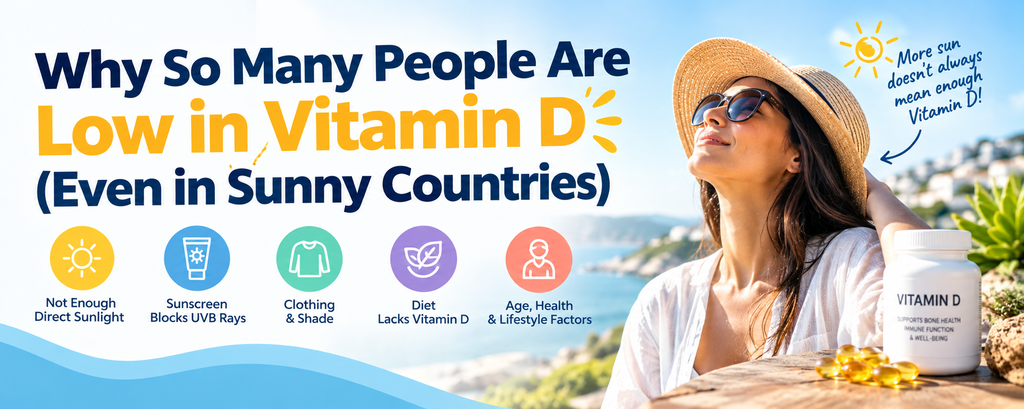
Why vitamin D deficiency is common, even in sunny places, and the simple, safe steps to take before reaching for supplements.
It sounds odd. If you live somewhere with plenty of sunshine, you’d expect to have enough vitamin D. Yet low levels are common around the world, including in hot countries.
What vitamin D does
Vitamin D helps your body absorb calcium, which supports bones and teeth. It also plays a part in muscles and the immune system. Your skin makes it when it’s exposed to sunlight, which is why it’s called the sunshine vitamin.
Why sunshine isn’t always enough
Several everyday things reduce how much your skin makes:
- Spending most of the day indoors at work or school
- Wearing clothing that covers most of the skin
- Using sunscreen, which is important for skin protection
- Having darker skin, which makes vitamin D more slowly from the same sunlight
- Air pollution, which can reduce the sun’s rays reaching you
- Getting older, because skin becomes less efficient
So someone can live in a sunny place and still not make much.
What it can look like
Low vitamin D often causes no obvious symptoms. When it’s low for a long time, some people notice bone or muscle aches, or feel unusually tired. Those symptoms are common and can have many other causes, so please don’t guess.
Food helps, but only a little
Few foods contain much vitamin D. Oily fish like salmon and sardines are good sources. Egg yolks, some mushrooms and fortified foods, such as certain milks and cereals, give smaller amounts. For most people, diet alone doesn’t provide enough.
Safe sun habits
Short, sensible time outdoors can help, but be careful. Too much sun raises the risk of skin damage and sunburn, so don’t aim to burn. Early morning or late afternoon is gentler than midday heat.
Get tested before you supplement
A simple blood test can show your level. If it’s low, a doctor can tell you what to take and for how long. Taking large amounts on your own isn’t a good idea, because vitamin D is stored in the body and too much can cause problems.
Who should ask a doctor sooner
Pregnant women, older adults, people with bone problems, kidney or digestive conditions, and anyone on regular medication should check with a doctor before taking supplements.
The takeaway is simple: don’t assume, and don’t self-prescribe. A test and a chat with your doctor beat guessing.
This article is for general information only and is not medical advice.